 Client Login
 Share on facebook
 Share on X

BlogEnglish
October 29, 2026Value Added Tax on Cross-Border Digital Sales in Indonesia
Selling digital products or services to customers in Indonesia can create tax questions for businesses based overseas.

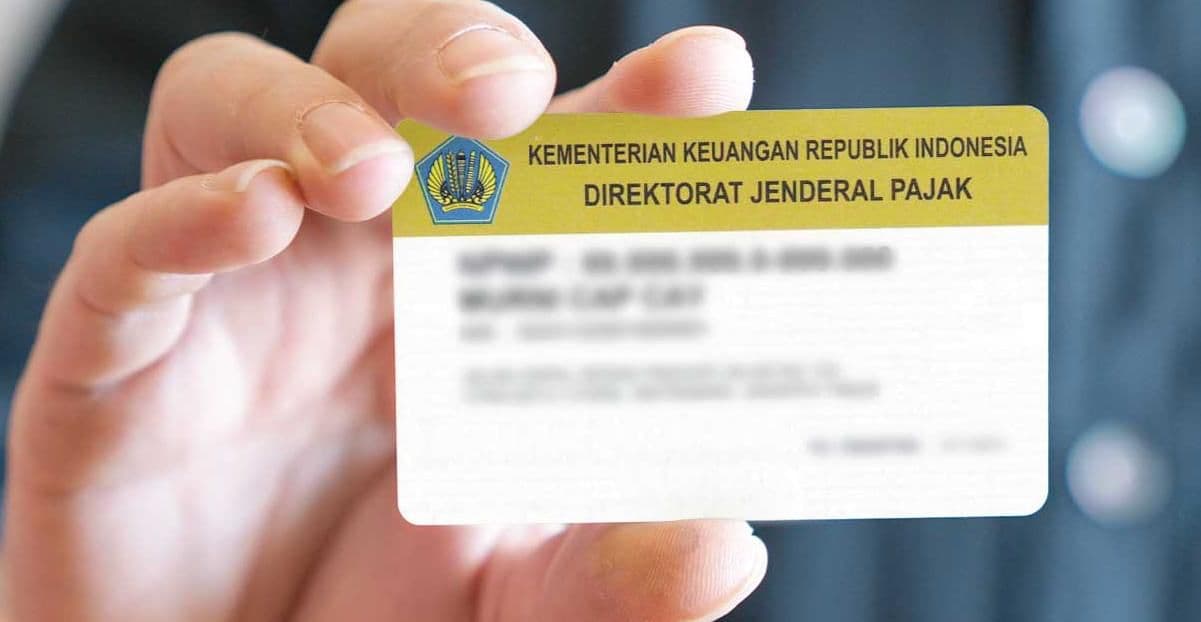
Expanding into Indonesia, whether through a foreign owned company (PT PMA), a representative office, or simply relocating for work, starts with one core requirement: obtaining a Tax Identification Number, locally known as Nomor Pokok Wajib Pajak (NPWP).
Since Indonesia's full transition to the Coretax DJP system, both the format of the NPWP and the way you register for it have changed significantly.
This guide walks through what an NPWP is, who needs one, how the new 16 digit system works, and the exact registration steps for companies and individuals.
The NPWP is issued by the Directorate General of Taxes (Direktorat Jenderal Pajak, or DJP) under Indonesia's Ministry of Finance. It is the identifier used for all tax related activity in the country, from filing returns to invoicing and withholding tax.
Since the rollout of Coretax DJP, the single platform that replaced DJP Online, e-Faktur, and e-Bupot, every NPWP in Indonesia now uses a 16 digit format, regardless of whether the taxpayer is an individual, a company, or a government institution. This is a meaningful change from the older 15 digit NPWP that many guides still reference.
Without a valid NPWP, individuals and businesses in Indonesia face restrictions on opening bank accounts, applying for business licenses, hiring staff, issuing invoices, and filing tax returns through Coretax.
The requirement to obtain a tax identification number depends on the taxpayer’s status and activities in Indonesia. For businesses, the registration process may form part of establishing and operating a legally recognised business entity.
Any foreign direct investment company (PT PMA) must obtain an NPWP as part of incorporation, regardless of sector or ownership structure.
Under the current system, this is closely tied to the Online Single Submission (OSS) system. Once a company receives its Business Identification Number (Nomor Induk Berusaha, or NIB) through OSS, Coretax processes the corresponding tax registration in parallel.
Representative offices and other non-revenue-generating foreign business entities in Indonesia are still required to register for an NPWP for administrative and compliance purposes, even if they are not conducting commercial transactions locally.
Branch locations no longer receive a separate branch NPWP. Instead, they are issued a Nomor Identitas Tempat Kegiatan Usaha (NITKU), a business location identifier linked to the parent entity's NPWP.
Expatriates who live, work, or earn income in Indonesia, such as directors or employees of foreign companies, also need a Tax Identification Number. Requirements differ depending on residency status:
While both use the same 16 digit format, corporate and individual NPWPs are built differently:
For Indonesian residents, the NPWP is now the same as the person's Nomor Induk Kependudukan (NIK), or national ID number. This activation is not automatic.
Residents still need to activate their NIK as an NPWP through Coretax before their tax status shows as active in the DJP system.
These use the older 15 digit number with a single "0" added to the front to reach 16 digits, or a new 16 digit number issued directly if the entity was established after the format change.
Understanding this distinction matters because it determines which registration path applies to you and what documentation is required.
Indonesia's move to a 16 digit NPWP began under PMK 112/PMK.03/2022 and was reinforced by later regulations, including PMK 136/PMK.03/2023 and PER-6/PJ/2024. The change accompanied the launch of Coretax DJP, Indonesia's unified tax administration platform, which consolidated taxpayer registration, VAT invoicing, withholding certificates, payments, and tax return filing into one system.
Key points of the transition:
Registration for both companies and individuals is now handled through the Coretax DJP portal rather than the older DJP Online system.
For companies:
For foreign individuals:
Incomplete or mismatched documentation, particularly legal data that doesn't match the AHU database, is the most common cause of registration delays.
NPWP registration can typically take 1 to 3 working days when all required information and legal documents are complete and accurate.
Some applications may be processed on the same day, while individual registrations through Coretax can sometimes be completed faster.
For companies, Coretax validates registration data against the AHU database as part of the registration process.
An NPWP is not just an administrative formality. It is a legal requirement that enables businesses and individuals to:
Without a valid NPWP, businesses may face higher withholding tax rates, be excluded from available tax incentives, and risk non-compliance penalties, now more easily flagged due to Coretax's automated data matching and pre-populated reporting features.
Navigating Coretax and Indonesia's updated 16 digit NPWP system can be complex, especially for foreign investors, expatriates, and businesses unfamiliar with local regulations. CPT Corporate offers end-to-end support, including:
As part of our comprehensive tax services in Indonesia, we help ensure your registration is accurate the first time and that your business stays compliant as regulations continue to evolve.
Getting your NPWP is an important step in setting up and operating in Indonesia, but the process can become less straightforward when company records, Coretax registration, or foreign taxpayer requirements are involved.
If you are unsure which registration applies to you or want to avoid issues caused by incomplete or mismatched information, getting the right support before submitting your application can help you move forward with the right documentation.
CPT Corporate can assist businesses and foreign individuals with NPWP registration and related tax administration in Indonesia.
If you need support with Coretax, NPWP registration, or your broader tax requirements, explore our tax and accounting services in Indonesia or contact CPT Corporate to discuss your requirements and next steps!
CPT Corporate, Your Trusted Tax and Business Advisor in Indonesia
Table of Contents
Related Posts
Value Added Tax on Cross-Border Digital Sales in Indonesia
Selling digital products or services to customers in Indonesia can create tax questions for businesses based overseas.

Understanding ITAS in Indonesia: Visa Types, Stay Permit Rules and What Foreigners Need to Know
Foreign nationals planning to live in Indonesia for work, investment, family or another approved purpose need to understand which immigration permission applies to their circumstances.

Mandatory Export of Ferro Alloys Through PT DSI from 2027: What Is the Impact on Businesses?
Starting 1 January 2027, exports of ferro alloys can only be carried out through PT Danantara Sumberdaya Indonesia (PT DSI). Ahead of that deadline, the Ministry of Trade is evaluating whether the infrastructure, implementing regulations, and business actors are ready.

Schedule a Free Consultation!
Tell us about your plan and our consultants will reach out to you to assist with your needs.
