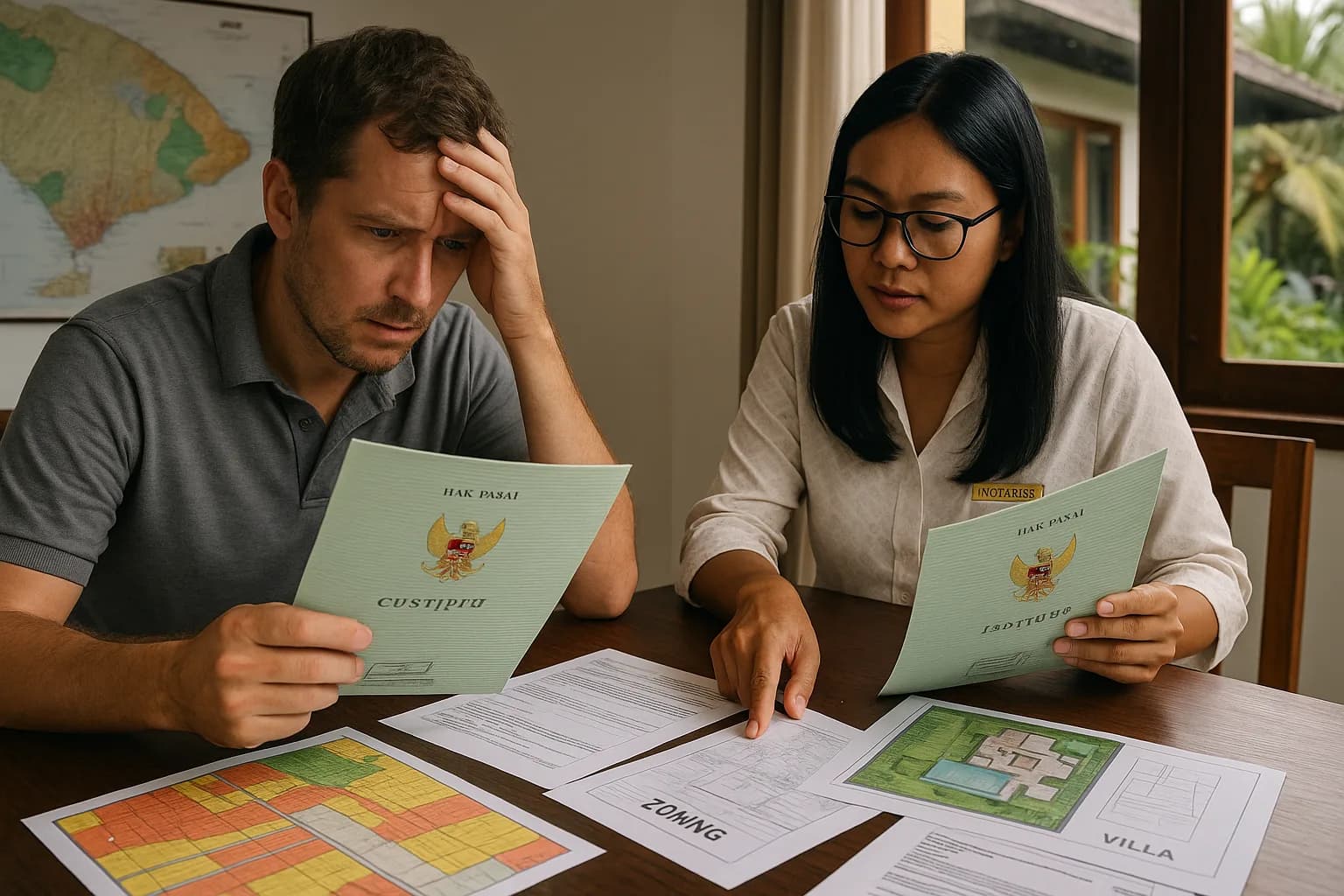
Buying property in Bali has become a global trend. From digital nomads who want to settle in paradise, to international investors searching for high-return villa rentals, the Island of the Gods attracts thousands of foreign buyers each year. But behind the sunsets and marketing brochures, Bali’s property market is uniquely complex — especially for foreigners. Indonesian land laws, zoning restrictions, access rights, and ownership limitations create a landscape where a single mistake can trigger years of legal issues, financial losses, or even complete loss of rights to the property.
In recent years, regulatory developments have made certain pathways more accessible for foreigners — such as Hak Pakai (Right to Use), long-term leaseholds, and Hak Guna Bangunan (HGB) via a PT PMA company. However, these options come with strict requirements, restrictions, and renewal obligations. Many foreign investors misunderstand these rules or rely on “agents” who oversimplify legal risks. According to several legal and property advisories operating in Indonesia, misunderstanding ownership rights remains one of the most common and costly mistakes foreigners make when buying land or villas in Bali.
To help you avoid these traps, this article breaks down the biggest mistakes that can cost investors millions — and what you must do to ensure your Bali property investment is safe, legal, and profitable.
Understanding Foreign Ownership Limitations in Bali
Before diving into the mistakes, it’s crucial to understand the legal foundation. Under the Basic Agrarian Law of 1960, only Indonesian citizens can legally hold freehold land (Hak Milik). This means foreigners cannot own land under the strongest form of ownership that many people mistakenly assume they can obtain.
Instead, foreigners typically utilise:
- Hak Pakai (Right to Use) — often used for residential purposes; renewable but limited in scope.
- Leasehold (Hak Sewa) — long-term lease agreements, usually 25–30 years, extendable by contract; does not grant permanent ownership.
- HGB via PT PMA (Right to Build under a foreign-owned company) — used for commercial investments such as villa rentals or developments.
Many investors hear terms like “foreigner freehold” or are offered “special arrangements” to bypass these restrictions. These claims are misleading and often illegal. Misunderstanding these foundational rules is the root cause of many of the mistakes below.
Major Property Buying Mistakes That Can Cost You Millions
1. Believing Foreigners Can Own Freehold (Hak Milik)
This is the biggest misconception in Bali’s property market. No matter what an agent tells you, foreigners cannot legally hold Hak Milik under their personal name.
Professional service providers like CPT Corporate and multiple legal advisories repeatedly warn that misinterpreting this rule leads to severe consequences — including invalid contracts, inability to enforce ownership rights, and exposure to disputes.
Some buyers intentionally overlook this rule because they’re offered “workarounds.” Which leads to the next point.
2. Using Nominee Schemes (Local Representative Holding Freehold for You)
Many foreigners enter into nominee arrangements: a local Indonesian appears as the official owner on paper, while a private agreement states the foreigner is the “real” owner.
While common, nominee schemes are extremely risky for three reasons:
- They can be deemed illegal and unenforceable if challenged.
- The foreigner has no actual legal control over the property.
- If the relationship with the nominee breaks down, the foreigner has limited protection.
Property consultants such as Bali Exception and multiple law firms stress that nominee agreements leave foreign investors vulnerable. If your nominee sells the land, dies, divorces, or becomes uncooperative — you may lose everything.
3. Skipping Due Diligence on Land Certificates, Zoning, and Ownership History
Bali has multiple zoning categories (residential, tourism, green zone, agricultural), each restricting what can legally be built.
Common issues found during proper due diligence include:
- Land zoned as agricultural but marketed as “villa-ready land”
- Certificates with incomplete inheritance documents
- Land with unresolved family or village disputes
- Land overlapping with protected green zones
- Ownership not matching the seller
Many disputes arise years later, long after the money is paid. This is why trusted notaries and legal teams repeatedly emphasize due diligence as the most important step before paying deposits.
4. Buying Land Without Confirming Legal Road Access (Right of Way)
One of the most overlooked problems is land with no legal access. The land may physically appear accessible, but the legal right of way is not registered.
Without proper access rights:
- You cannot obtain building permits
- You may be sued by surrounding landowners
- You may need to buy additional land or negotiate costly agreements
- Your property value will drop significantly
Many investors learn this only after construction begins — when it’s too late.
5. Underestimating Hidden Costs, Taxes, and Permit Fees
Buying property in Bali involves far more than purchasing land or a villa. Hidden costs often include:
- Notary fees
- Transfer and acquisition taxes
- Due diligence costs
- Building permits (IMB/ PBG)
- Environmental approvals
- Renewal costs for Hak Pakai or leaseholds
- Ongoing land and building taxes
- Monthly operational taxes for villa rentals
Advisories such as InvestLandBali highlight that foreign buyers often miscalculate overall investment budgets by 20–40% due to these hidden obligations.
6. Choosing the Wrong Legal Structure (Personal vs PT PMA)
Some buyers purchase land under a leasehold contract when they actually plan to run villa rentals — which legally requires a business license under a PT PMA. Others set up a PT PMA even though they only need a residential property for personal use, which adds unnecessary cost and compliance burdens.
Misalignment between:
- Ownership structure
- Intended use (personal or commercial)
- Licensing
- Exit strategy
can lead to compliance violations, expensive restructuring, or difficulties selling the property later.
7. Relying on Unqualified Agents, Brokers, or Notaries
Not all property agents in Bali disclose the full legal risks. Some are unlicensed, inexperienced, or financially incentivized to close deals quickly. Using an unqualified notary or “friend’s notary” can lead to incomplete documentation, invalid contracts, or missed zoning violations.
Legal consultants consistently warn investors to avoid casual recommendations and instead use established, professional due diligence teams.
8. Ignoring Long-Term Renewals and Exit Strategy
Leasehold properties (25–30 years) are common in Bali. But many buyers fail to consider:
- What happens when the lease expires
- How difficult it may be to negotiate extensions
- Whether heirs or family members have claims after the original lessor dies
- The long-term value of a property with a diminishing lease period
- Whether their exit plan is realistic
HGB properties under PT PMA must also be renewed at intervals, and the company itself must remain compliant for the title to stay valid.
Investors who ignore long-term renewal strategy often face huge losses when attempting to sell or restructure later.
How to Avoid These Expensive Mistakes
While Bali is complex, investing safely is absolutely possible. The key is to treat the process with the same seriousness you would apply when buying property in your home country — or stricter.
Here’s what every buyer should do:
- Perform full legal due diligence on certificates, zoning, maps, and access rights
- Work with reputable, registered notaries and property legal experts
- Understand which land titles are legally allowed for foreigners
- Create a compliant ownership structure aligned with your goals
- Budget all hidden costs, taxes, and long-term renewals
- Avoid informal arrangements, nominee schemes, or verbal agreements
- Ensure every document is verified and translated properly
A professional approach significantly reduces risk and ensures your Bali investment grows safely.
Frequently Asked Questions (FAQ)
Can foreigners buy freehold property in Bali?
No. Foreigners cannot legally own Hak Milik (freehold). They can hold property under Hak Pakai, leasehold, or HGB via a PT PMA.
Is leasehold safe in Bali?
Yes, if the contract is properly drafted, includes renewal clauses, and is verified by a registered notary. Poorly written leases expose buyers to risk.
Is using a nominee safe?
No. Nominee arrangements are high-risk and often impossible to enforce legally.
Is PT PMA the best option for foreign buyers?
It depends. For commercial villas or rental businesses, PT PMA is often necessary. For personal use properties, properly structured Hak Pakai or leasehold may be more suitable.
How much are hidden costs when buying property in Bali?
Expect 10–20% additional costs depending on structure, permits, taxes, and notary fees. For commercial properties, operational taxes also apply.
Conclusion
Bali is one of the world’s most attractive destinations for property investment — but it comes with a complex legal landscape that many foreigners underestimate. Misunderstanding ownership laws, skipping due diligence, trusting informal promises, and failing to plan long-term are mistakes that can easily cost millions.
A secure investment requires patience, proper advice, and compliance with Indonesian law. Approaching Bali property with professionalism not only protects your money — it ensures your dream home or villa business thrives for years.
If you’re considering buying land, a villa, or starting a property investment in Bali, our team at CPT Corporate can help you navigate ownership structures, compliance, due diligence, and tax obligations. Reach out today for a consultation before you commit — and let’s ensure your Bali investment is safe, legal, and built on solid foundations.