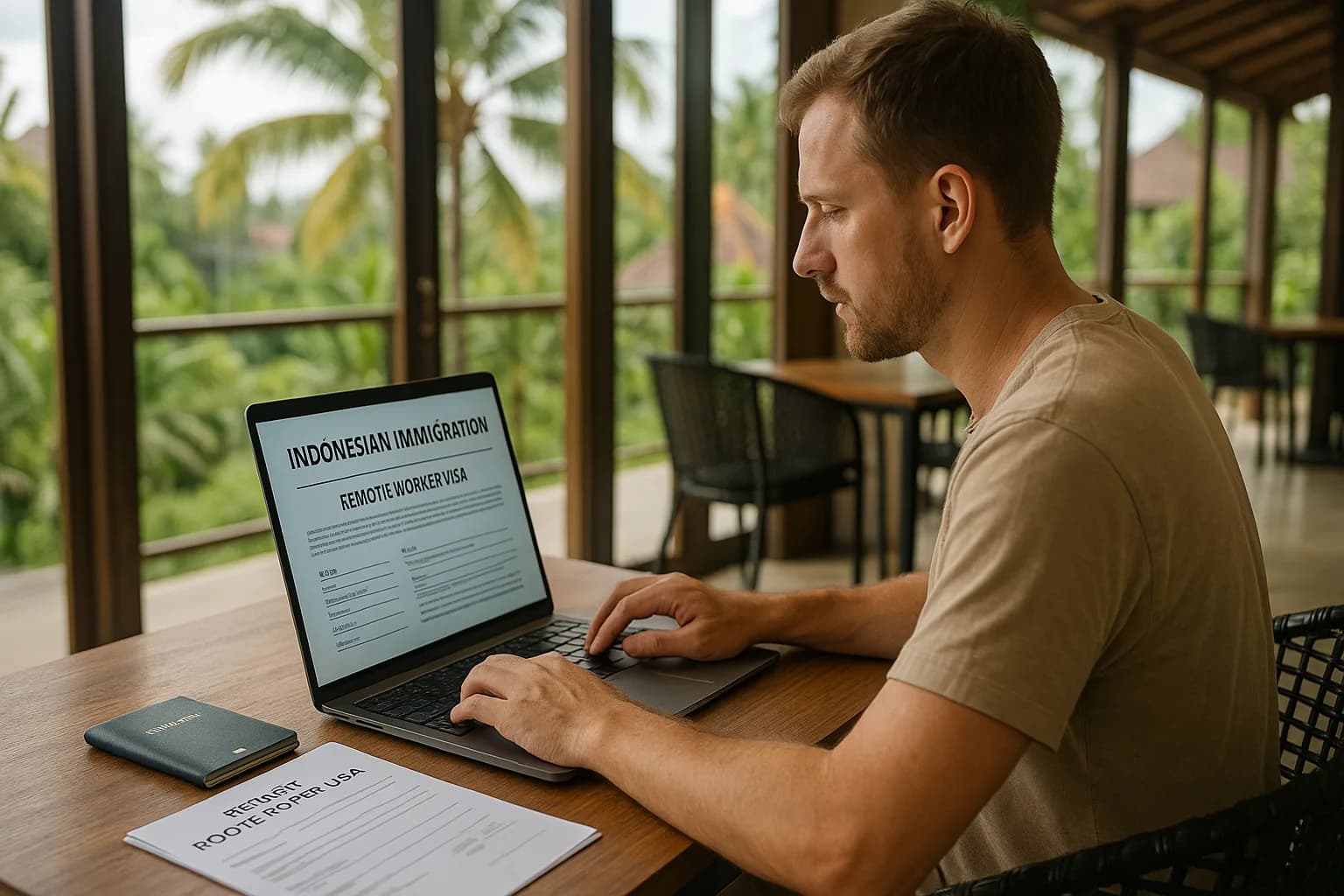
Bali has become one of the world’s most attractive destinations for remote workers, digital nomads, and foreign professionals seeking a beautiful, laid-back environment to live and work. With its beaches, cafés, coworking hubs, and international community, it’s no surprise that thousands of foreigners choose the island as their base while working for companies abroad.
But here’s the truth most people overlook: Indonesia has strict immigration and manpower regulations, and many foreigners unknowingly violate them. Something as simple as accepting online payments from Indonesian clients, posting a freelance service on Instagram targeting locals, or staying too long under the wrong visa can result in deportation, fines, and long-term blacklist.
This article is designed to help you navigate the legal landscape with clarity. Whether you plan to stay for one month or one year, you’ll learn how to work remotely from Bali without violating Indonesian immigration rules, supported by up-to-date information from official immigration, manpower, and tax references.
What “Remote Work” Means Under Indonesian Immigration Rules
Working remotely in Indonesia is allowed only if your income comes from outside Indonesia, and you do not engage in any activities that generate income within Indonesian territory.
This means:
- You can work for a foreign employer, foreign clients, or your own business registered abroad.
- You cannot work for Indonesian companies, clients, or businesses without a proper work permit.
- You cannot sell goods or services to Indonesian residents, even if you call it freelance or “just helping out.”
- You cannot take payments into an Indonesian bank account or receive Indonesian-source income.
Indonesia uses the principle of “permitted activities must match the visa.” When you perform work outside your visa’s allowed category, it becomes a violation, even if the work is online or informal.
Long-Stay Legal Option: The E33G Remote Worker Visa (Remote Worker KITAS)
Indonesia now offers a dedicated visa category for remote workers: the E33G Remote Worker Visa, often referred to as the “Remote Worker KITAS.” This is the most compliant pathway for digital nomads who want to live and work from Bali for an extended period.
What the E33G Allows You To Do
The E33G visa permits foreigners to:
- Live in Indonesia while working remotely for a company located outside Indonesia
- Stay long-term (usually up to 1 year depending on the issuance)
- Enter and exit Indonesia freely while the visa remains valid
- Bring dependents (spouse, children) under the family KITAS category
Who Is Eligible?
You can apply if:
- You are employed by a non-Indonesian company, or
- You own a business that is registered outside Indonesia,
- You can provide proof of income, bank statements, and employment/contract documentation
- You do not perform work or receive payments from inside Indonesia
Important Restrictions
Even with E33G, you cannot:
- Do any work that is paid by Indonesian entities
- Perform business activities generating income inside Indonesia
- Accept local clients, even if they pay you in foreign currency
The E33G is intended strictly for remote work with foreign income, and this distinction matters for immigration, manpower, and taxation.
Short-Stay Options for Remote Workers (With Limitations)
If you’re planning a short stay or are still exploring whether Bali fits your lifestyle, there are short-stay visas commonly used by remote workers. These include:
Visa on Arrival (VOA / e-VOA)
- Valid for 30 days, extendable once to 60 days
- Fast, easy, low cost
- Designed for tourism, not work
While many nomads stay in Bali on VOA while doing online work, immigration rules still apply: you cannot work for Indonesian entities or engage in any income-generating activity within the territory.
B211A Visit Visa (Single Entry)
- Initially valid for 60 days
- Extendable up to a total stay of approximately 180 days
- Suitable for longer visits or remote work for foreign employers only
This visa is commonly used by remote workers who want to stay for several months without committing to a KITAS. But again, it does not allow you to perform local work or paid activities directed at Indonesia.
Working With Indonesian Clients or Companies Requires a Work Permit (IMTA + Work KITAS)
Many foreigners assume that if they do a small freelance project or collaborate with a local business online from a café, immigration won’t care. This is incorrect.
Indonesia requires foreigners who work for Indonesian companies or who generate income from Indonesian sources to have:
- An employer-sponsored RPTKA (manpower plan)
- An approved IMTA (work permit)
- A Work KITAS tied to that employer
This is non-negotiable and applies even if your work is occasional, remote, or not physically in an office. If the income source is in Indonesia, immigration considers it working illegally without proper permits.
Tax Considerations: The 183-Day Rule Most Nomads Ignore
Most digital nomads focus only on visas, forgetting that Indonesia also enforces tax residency rules.
Under Indonesian tax regulations, you are considered an Indonesian tax resident if:
- You stay in Indonesia more than 183 days within any 12-month period, or
- You show an intention to reside in Indonesia long-term (such as by obtaining certain types of long-stay permits)
Once tax resident:
- You must register for a NPWP (tax ID)
- You may be obliged to report worldwide income
- You may need to file annual Indonesian tax reports
This applies even if all your income is earned from abroad. The tax law is based on presence and residency, not the source of income.
What this means for remote workers:
If you’re planning to stay in Bali longer than 6 months — even under E33G or a KITAS — you should seek professional tax advice to avoid penalties or double-taxation issues.
Enforcement is Real: Deportations Happen Regularly
Indonesian Immigration (Imigrasi) actively enforces visa regulations, especially in Bali where violations are common. In recent years, there have been consistent cases of:
- Foreigners deported for working on a tourist visa
- Freelancers caught offering services online without permits
- Influencers banned for brand collaborations while on VOA
- Digital nomads penalized for generating Indonesian-source income
- Remote workers expelled for misunderstanding visa rules
Penalties can include:
- Deportation
- Overstay fines
- Blacklisting (ban from re-entering)
- Criminal charges for severe violations
Even a casual paid collaboration with a local brand counts as working without a permit. Immigration monitors activity both physically and digitally, especially on social media.
How to Work Remotely in Bali Without Breaking the Rules (Compliance Checklist)
Here is a practical checklist that keeps you fully compliant:
1. Choose the right visa for your situation
- For long-term remote work → E33G Remote Worker Visa
- For short visits while working for foreign employers → VOA or B211A
2. Never receive income from Indonesian individuals or companies
Avoid:
- Local freelance clients
- Indonesian brand deals
- Being paid in IDR
- Local transfers into an Indonesian bank account
3. Don’t conduct local commercial activities
This includes:
- Selling services to residents
- Promoting paid activities inside Indonesia
- Teaching workshops, fitness classes, photography sessions, etc.
4. Track your days
Plan your year to avoid unintended tax residency unless you choose to become one.
5. Keep documentation
Maintain:
- Employment contract with foreign employer
- Invoices showing foreign clients
- Bank statements proving foreign income
6. If you want to work with Indonesian entities — do it legally
This may involve:
- Setting up a PT PMA
- Being properly employed via IMTA + Work KITAS
- Using an EOR (Employer of Record) solution
CPT Corporate can guide you through these options safely.
Frequently Asked Questions (FAQ)
1. Can I work remotely from Bali on a tourist visa?
You can work for a foreign employer while in Indonesia, but you cannot perform activities that generate Indonesian-source income. Tourist visas are not intended for work, so use them carefully and only for short periods.
2. Do I need a work permit if my clients are abroad?
If your income is 100% from outside Indonesia, a remote worker visa (E33G) is typically more appropriate than a work permit.
3. What happens if I accept one Indonesian client “just once”?
It is still considered illegal work. Immigration does not differentiate between “one-time” and “full-time.” Penalties can include deportation.
4. Can I stay in Bali long-term as a remote worker without becoming a tax resident?
Yes, but only if you stay under 183 days within any rolling 12-month period and avoid actions that imply long-term residence.
5. Can I teach workshops or run events in Bali if I’m a digital nomad?
Only if you have the proper Work KITAS and IMTA. Otherwise, it counts as illegal local work.
Conclusion
Working remotely from Bali is absolutely possible and increasingly supported by Indonesian immigration through visas like the E33G Remote Worker KITAS. But it comes with responsibilities — especially regarding visa compliance, work permit restrictions, and tax residency rules.
By choosing the right visa, keeping your activities aligned with immigration regulations, and avoiding local income without proper permits, you can enjoy Bali’s lifestyle fully and safely.
If you want to ensure full compliance while working remotely from Bali, CPT Corporate can assist with:
- E33G Remote Worker Visa applications
- Company registration (PT PMA)
- Work KITAS and IMTA
- Indonesian tax advisory
- EOR (Employer of Record) solutions for businesses hiring foreigners
Stay in Bali legally, confidently, and without stress.
Contact CPT Corporate today for a free consultation.