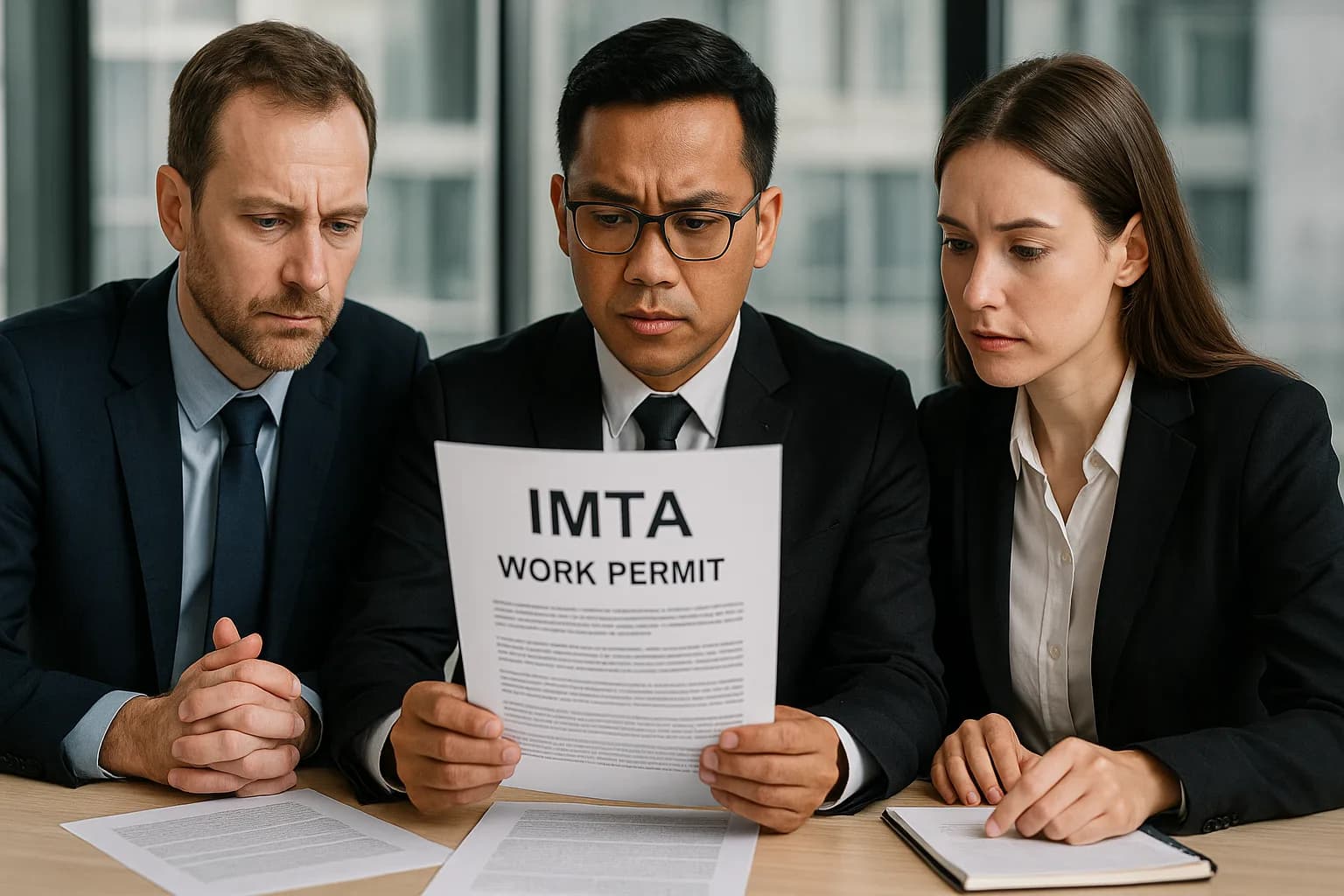
For many foreign professionals and companies operating in Indonesia, securing the right work permit is essential to ensuring smooth business operations. The IMTA—Indonesia’s official work permit issued by the Ministry of Manpower—plays a central role in authorizing foreign employment in the country. However, in recent years, businesses in Bali and Jakarta have reported frustration with IMTA processing delays, renewal backlogs, and unexpected administrative slowdowns.
While Indonesia has made efforts to simplify its foreign-worker procedures through regulations such as the 2018 Presidential Regulation on Foreign Workers, the reality on the ground is that processing times can still be unpredictable. This article breaks down why IMTA delays occur, what makes Bali and Jakarta unique, and how companies can better prepare themselves to avoid costly disruptions.
What Is IMTA and Why It Matters
Before exploring the causes of IMTA delays, it is important to understand what this permit actually entails. The IMTA is the official Work Permit for Foreign Workers, issued after the employer secures an approved RPTKA (Foreign Worker Utilization Plan). Together, these documents form the legal foundation that allows a foreigner to work in Indonesia.
The general workflow typically includes:
- RPTKA application and approval
- Payment of DKP-TKA (foreign worker compensation fund)
- Issuance of IMTA
- Issuance of VITAS (Limited Stay Visa)
- Conversion to KITAS (Limited Stay Permit)
According to various procedural guides from reputable consultancies, the entire IMTA + KITAS process can take around ten weeks, because it involves multiple ministries and layered approvals. While the IMTA itself may sometimes be issued within 2–3 working days after payment, the overall process is much longer because the RPTKA, VITAS, and KITAS steps add significant time and dependencies.
Understanding these interlinked requirements is key to understanding how delays happen—not only due to the IMTA itself, but due to processes that precede or follow it.
Why IMTA Delays Happen in Indonesia
IMTA delays are rarely caused by a single issue. Instead, they emerge from a combination of administrative, regulatory, and human-aspect factors. Based on common patterns identified by legal and HR consultancies, visa agencies, and companies operating in Indonesia, these are the most common causes:
Incomplete or Incorrect Documentation
One of the major contributors to IMTA delays is incomplete or incorrect documentation submitted by the employer or the foreign employee. The IMTA process requires:
- Accurate company documents
- Valid passport with sufficient validity
- CV and education certificates
- Sponsor-company credentials
- Proper job title alignment with permitted positions
Any minor discrepancy, such as mismatched job titles, outdated company documents, or missing digital files, can stop the application mid-process.
Late Submission by Sponsor or HR Department
Another major reason for delays is poor timing. Some employers mistakenly begin the process too close to the planned work date or too close to an existing permit’s expiration. Compliance consultancies highlight that delays in renewal submission are one of the biggest culprits behind expired work permits. Once part of the process expires, companies may need to restart multiple steps, resulting in longer processing durations.
Multiple Government Departments Involved
The IMTA process is not handled by one single authority. It requires coordination among:
- Ministry of Manpower (RPTKA + IMTA)
- Directorate General of Immigration (VITAS + KITAS)
- Local immigration offices for biometrics and final issuance
In practice, this means that any backlog within any department can slow down the entire process—even if other steps are progressing smoothly.
Regulatory Updates and Interpretation Differences
Indonesia periodically updates or clarifies its regulations around foreign employment, work permits, and permitted job titles. While these changes aim to improve efficiency, they can also cause temporary confusion in regional offices, especially when local officials interpret new rules differently.
High Application Volume
This factor is particularly relevant when comparing Bali vs Jakarta:
- Bali, with its tourism and hospitality focus, sees a large number of foreign applicants for managerial, creative, and specialized roles.
- Jakarta, as the business hub of Indonesia, handles high volumes from multinational companies, financial institutions, and corporate groups.
High traffic in major offices can sometimes lead to slower processing times, especially during peak seasons or regulation transitions.
IMTA Processing Delays in Bali vs Jakarta
While no official public dataset compares IMTA processing speeds between Bali and Jakarta, real-world patterns from visa agencies, HR consultancies, and corporate employers offer meaningful insights.
Bali – High Volume, Tourism-Driven, Agent-Dependent
Bali’s economy heavily relies on foreign talent within hospitality, tourism, wellness, and creative industries. This leads to increased application traffic and often heavy dependence on visa agents. While some agents provide excellent service, others may introduce avoidable delays due to:
- Backlogged workflows
- Incomplete submissions
- Misaligned expectations about timelines
- Limited communication with manpower authorities
Additionally, Bali’s reliance on expatriate-heavy sectors means a surge in peak seasons, which can temporarily slow the system.
Jakarta – Corporate Hub With Higher Compliance Demand
Jakarta immigration and manpower offices handle a high volume of applications from corporate employers, multinational firms, and foreign-invested companies (PT PMA). Companies in Jakarta tend to follow more formalized HR compliance systems, but delays still occur due to:
- Stricter document verification
- Longer internal approval chains within large organizations
- Rush periods at end of fiscal quarters
- Regulatory cross-checks for positions requiring specific qualifications
Both Bali and Jakarta see IMTA delays, but the root causes often differ. Bali’s delays lean toward agent and volume issues, while Jakarta’s delays tend to be related to corporate compliance cycles and document completeness.
How IMTA Delays Impact Businesses and Foreign Workers
IMTA delays are not only an administrative inconvenience—they can create real operational risks. Businesses may experience:
- Interrupted work schedules for foreign staff
- Difficulty onboarding new talent
- Increased costs for express processing or renewal surcharges
- Potential penalties if IMTA or KITAS expire before renewal
- Legal exposure if foreign employees continue work without a valid permit
For foreign employees, delays can cause stress, travel disruptions, and uncertainty about job start dates or visa validity.
In serious cases, operating with an expired IMTA or KITAS can lead to deportation or business penalties. This is why early preparation is essential.
How Companies Can Reduce IMTA Processing Delays
To minimize or eliminate IMTA delays, companies should adopt proactive compliance steps. You may include the following as best practices in your internal HR or visa management system:
Start Early—At Least 2–3 Months in Advance
Given the ten-week overall processing timeline, companies should not wait until the last minute. Early initiation ensures a buffer period for unexpected corrections.
Maintain Digital and Physical Documentation
Having updated digital copies of all corporate, employee, and licensing documents prevents delays caused by missing paperwork.
Align RPTKA, IMTA, and KITAS Expiry Dates
Misalignment between these permits is one of the most common and preventable causes of renewal delays.
Use Trusted, Experienced Visa Consultants
Especially in Bali, where service quality varies widely, choosing knowledgeable consultants reduces the risk of misfiling or incomplete submissions.
Track Regulatory Updates
Regulatory changes can take time to cascade through the system. Staying updated ensures compliance with new formats, job-title rules, or digital submission procedures.
Frequently Asked Questions (FAQ)
How long does an IMTA take to process?
The IMTA itself may take only a few working days once all prerequisites are approved. However, the full process—RPTKA, IMTA, VITAS, KITAS—typically takes up to ten weeks depending on the region and completeness of documents.
Are IMTA delays worse in Bali or Jakarta?
There is no official published dataset comparing the two. However, Bali may experience volume-related delays, while Jakarta may experience corporate documentation delays due to stricter verification.
Can foreigners work while waiting for IMTA approval?
No. A foreigner may not legally work until the IMTA and associated KITAS are fully approved.
What happens if IMTA renewal is delayed?
Delayed renewals can lead to expired work permits, which may expose companies and employees to penalties, legal issues, or forced exit from Indonesia.
Conclusion
IMTA processing delays in Bali and Jakarta are influenced by a blend of regulatory complexity, documentation requirements, high application volumes, and internal company readiness. While Indonesia has modernized many aspects of its foreign-worker system, the IMTA workflow still involves multiple ministries and verification layers, making proactive planning essential.
Businesses that invest in early preparation, complete documentation, knowledgeable consultants, and internal compliance systems significantly reduce the likelihood of delays. Whether your company operates in Bali’s tourism-focused environment or Jakarta’s corporate hub, understanding how IMTA works—and why delays happen—is the key to ensuring uninterrupted operations for foreign professionals.
Need Help With IMTA or KITAS Processing?
If your company wants smooth, compliant, and hassle-free IMTA management, CPT Corporate can assist with RPTKA preparation, IMTA issuance, KITAS conversion, and complete foreign-worker compliance.
Contact CPT Corporate today to avoid delays, reduce risk, and ensure your foreign employees can work legally and efficiently in Indonesia.